
Behind the Lens _ Part 3.
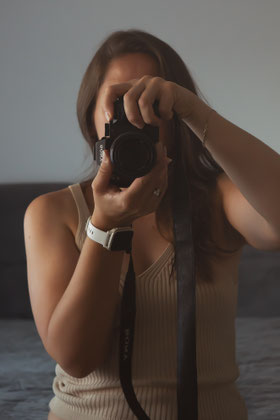
Photograph what moves you.
Social media constantly tells us what we should photograph.
The trending location.
The perfect portrait.
The dramatic landscape.
The viral editing style.
But photography becomes something different when we stop chasing attention and start paying attention.
Some of my favorite images would never become viral.
A small mushroom in the forest.
Light falling through the trees.
A quiet street at sunrise.
A detail nobody else noticed.
Yet those are the photographs that stay with me.
Because they were never about performance.
They were about connection.
The moment you stop asking "Will people like this?" and start asking "Why does this move me?", photography becomes personal again. And that's often where your own visual voice begins.
What is a photograph you love, even if nobody else noticed it?
Behind the Lens _ Part 2.

It took me many years to find my true voice in photography.
For a long time, I thought that if I simply photographed what I liked, everything would fall into place. Babies, families, events, restaurants, trends, advertising. I tried them all. Yet, the quiet ache inside me grew larger, heavier — an emptiness I couldn’t quite name.
At times, I had to put my camera down for days, sometimes weeks. To listen. To ask myself why.
Once, there was a little girl who used to stand in an old photo shop, waiting for the lady to disappear behind a black curtain — waiting for the magic to happen. The hush, the secret, that moment when the outside world faded away. Every time I lifted a camera to my eye, I was chasing that same spark — the moment that once left a glowing trace on my heart.
Now I know I don’t have to chase it. I only need to listen.
When I grow quiet enough, the path reveals itself — again and again — like a woven fabric shimmering with hidden gold threads. When I think it’s gone, it glimmers back at me,
softly, reassuringly. It appears in the morning mist over the meadow, in the warm afternoon light beneath the trees. It rustles in the bushes where the shy deer hides — the one I still haven’t
managed to capture — and sings in the trembling voice of a bird perched high above.
It lingers, too, in smaller things: in the scent of morning coffee, in the green of mint leaves, in the gentle grain of a wooden table.
Sometimes it’s bright and colorful, sometimes it lives in deep contrast. And at other times, it dissolves into the endless variations of black and white — quiet, timeless, whole.
That’s where I find my voice now.
Not in the noise, not in perfection — but in the silent thread that ties the world to the light.
Behind the Lens _ Part 1.
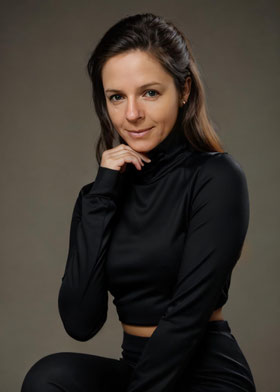
Originally written as the first reflection in this series
I've been fascinated by cameras and books since childhood. Books were always within reach, pulling me into their world of endless stories. Cameras, on the other hand, felt like a distant dream—there wasn’t one in our home, and back then, mobile phones weren’t a thing yet. My only encounters with photography were those rare visits to a studio for a quick passport photo.
Life happened. School, work, and daily routines pushed creative passions into the background, making them feel like a luxury rather than a necessity. But the longing to recapture the magic I once felt—both in photography and storytelling—kept pushing me forward.
I searched for inspiration across cities, cultures, and languages. One language led me to marriage, another helped me navigate the world, and a third became my home. But through all of this, I realized something profound: the best way for me to express myself is not through words, but through images. Because sometimes, a single photo speaks louder than a thousand words.
It took years to find my voice through photography—from the moment I first held a camera to truly understanding its power. But that’s a story for another post.
A Different Kind of Silence
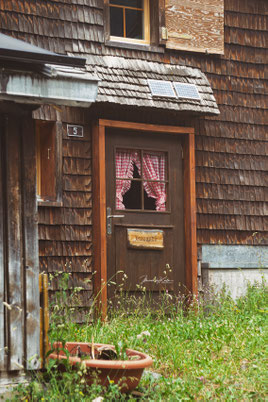
We often travel to discover new places.
Yet sometimes, without planning it, we discover something else entirely — a quieter version of ourselves.
Walking through small mountain villages, where wooden houses have stood for generations and flowers spill gently from weathered balconies, I found myself slowing down without even noticing. There was no urgency, no endless stream of notifications, no feeling of having to keep up with anything beyond the passing clouds.
Everything seemed to exist at its own unhurried pace.
The sound of distant cowbells drifted through the valleys. The mountains watched in silence. A narrow path disappeared into the forest, asking nothing except that I follow it for a little while.
It reminded me how rarely we allow ourselves to simply observe.
Photography has always been my way of doing that.
People often assume a camera is meant to capture moments. For me, it does something different. It asks me to stop. To notice how the morning light settles on an old wooden door. How wildflowers soften the edge of a stone wall. How mist slowly wraps itself around the mountains before quietly disappearing again.
Before every photograph, there is a moment of stillness.
A breath.
A pause.
Perhaps that is the part I treasure most.
Looking through the lens has become a form of meditation. Not because it helps me create beautiful images, but because it gently brings me back to the present. The photograph is only a small reminder of what I felt in that moment. The real gift is the attention itself.
In places like these, nothing tries to impress you. The villages do not compete for your attention. The mountains do not ask to be admired. They simply exist, with a quiet confidence that feels increasingly rare.
And somehow, that quiet becomes contagious.
You begin to walk more slowly.
You notice more.
You think less.
You breathe a little deeper.
When the day comes to an end, you realize that what felt like an ordinary walk was, in its own gentle way, a return to yourself.
Perhaps this is why I keep coming back to nature with my camera.
Not to collect photographs.
Not to chase perfect light.
But to remember that peace is rarely something we find.
More often, it is something we make space for.
Sometimes, all it takes is a quiet path, a mountain village, and the willingness to look a little longer.